A mini guide to garment branding: Choosing the perfect technique for your brand

When it comes to garment branding, the options can feel overwhelming. From embroidery to screen printing, each technique offers unique advantages depending on your goals, audience, and budget – and of course, the clothing or garment material!
To help you navigate the choices, we’ve put together a mini guide exploring the most popular garment branding methods and how they can bring your brand, logo and designs to life.
-
Screen printing: Bold and vibrant for bulk orders
Screen printing is the go-to choice for bold, sharp colours and long-lasting durability. Ideal for bulk orders, this centuries-old technique involves creating stencils (or screens) for each colour in your design, layering them with precision for vibrant results.
BEST FOR: T-shirts, hoodies, and uniforms with solid, simple designs.
WHY CHOOSE IT: Produces consistent, high-quality prints that withstand multiple washes.
PRO-TIP: Remember, screen printing cannot offer gradient print, you need solid colours in your design to ensure it pops!
-
Direct-to-Garment (DTG): Perfect for low quantities and high definition

Direct-to-garment printing is a digital revolution in garment branding. With low set-up costs and low minimum order requirements, it’s ideal for short runs or even one-off items. DTG excels at high-definition reproduction of multi-coloured, complex designs.
BEST FOR: Smooth garments like T-shirts and sweatshirts.
WHY CHOOSE IT: Low quantities and reduced set up time.
PRO-TIP: Water based ink system can be used which makes this process very planet friendly.
-
Sublimation printing: Full coverage and vivid colours
Sublimation printing opens up a world of creativity with edge-to-edge printing capabilities. Using heat to bond dye directly into fabric, this technique delivers vibrant, soft-to-the-touch designs that won’t fade.
BEST FOR: Ideal for sportswear and manmade materials.
WHY CHOOSE IT: Designs won’t fade or degrade.
PRO-TIP: The process doesn’t contain harmful substances or waste water. It is considered one of the most eco-friendly printing processes available.
-
Transfer printing: Versatile for unique shapes and colourful designs
Transfer printing is the jack-of-all-trades for branding. Whether it’s vinyl transfers for bold logos or lithographic transfers for large runs, this method works well on unusual shapes and man-made fibres.
BEST FOR: Short runs and complex, full colour designs.
WHY CHOOSE IT: Transfer printing has advanced so much in recent years. The quality and longevity will shock you!
PRO-TIP: Watch out for waterproof fabrics, as not all transfers may adhere as effectively.
-
Embroidery: Luxurious and long-lasting
Embroidery adds a premium touch to garments, making it the top choice for high-end products and workwear. Designs are digitised into stitch patterns, ensuring precision and durability.
BEST FOR: All items that have enough space to allow for an embroidery hoop to be placed.
WHY CHOOSE IT: Great for any size run, with a variety of finishes available. Perfect for garments with challenging surfaces such as seams.
PRO-TIP: Why stick with standard embroidery when we can offer special effects like metallic threads or 3D embroidery.
-
Special effects: Adding wow factor
If you’re looking for something truly unique, consider special effects to elevate your garment branding:
- Printing effects: Not only do we offer the standard print options we can also offer; Glitter, foil, metallic, reflective, colour-change, puff, or glow-in-the-dark prints. .
- Embroidery effects: Get creative with 3D foam for raised embroidery or luminous threads for night-time visibility.
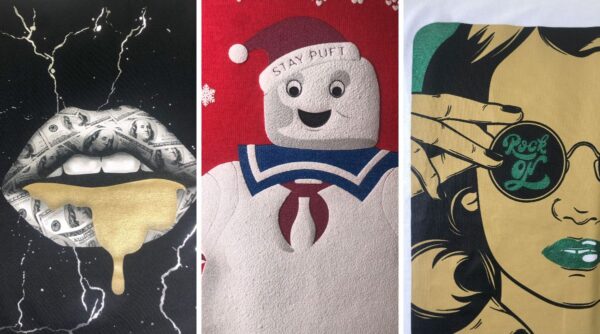
These effects turn standard branding into memorable, eye-catching designs that grab attention.
Choosing the right technique
Selecting the right garment branding technique depends on a few key factors:
- Purpose: Are you creating branded uniforms, promotional giveaways, or retail products?
- Quantity: Screen printing works well for large orders, while DTG shines for smaller runs.
- Fabric type: Sublimation is perfect for manmade materials, while embroidery add a premium touch to almost garment.
- Design complexity: Opt for transfer or DTG for intricate, colourful designs.
Garment branding is more than just adding a logo; it’s about choosing a technique that aligns with your brand identity and audience. Whether you’re after cost-effective simplicity or show-stopping special effects, there’s a solution to fit every need.
Ready to bring your designs to life? At etc. Branding, we offer expert guidance and a range of garment branding options to make your vision a reality.